

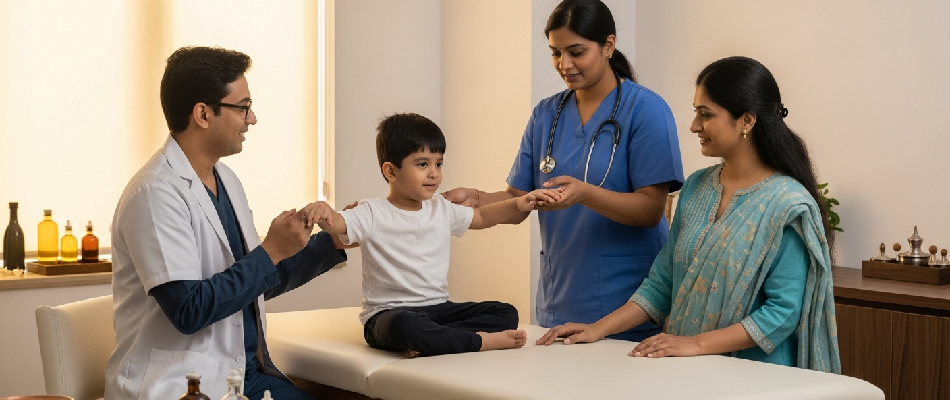
Cerebral Palsy: An Integrative Ayurvedic Approach at Dr. Sanjeev Kalra’s Brain Health Center, India
Cerebral Palsy (CP) is a group of early‑onset, lifelong neurodevelopmental conditions affecting movement, muscle tone, posture, and coordination due to injury or abnormal development of the developing brain. CP often co‑exists with other challenges like intellectual disability, epilepsy, sensory impairments, speech difficulties, and musculoskeletal problems
Global Prevalence
- • CP is one of the most common childhood motor disabilities worldwide, affecting 1.6 per 1000 children in high‑income countries and up to 4 per 1000 in low‑ and middle‑income regions.
- • Globally, about 50 million people live with cerebral palsy today.
- • Prevalence ranges between 1.5–4 per 1000 live births, with some regions (including India) reporting slightly higher rates.
These statistics show a significant worldwide need for long‑term, multidisciplinary care.
Symptoms & Signs of Cerebral Palsy
Cerebral Palsy affects each child differently, but common symptoms include:
Movement & Muscle Tone
- • Stiff or floppy muscles
- • Exaggerated reflexes (spasticity)
- • Poor balance and coordination (ataxia)
- • Uncontrolled or writhing movements
- • Tremors and difficulty with fine motor skills
Associated Challenges
- • Speech delays
- • Feeding difficulties
- • Vision or hearing issues
- • Intellectual disability or seizures
Diagnosis of Cerebral Palsy
Diagnosis is made through:
- • Developmental screening in infancy and toddlerhood
- • Neurological examination assessing tone, reflexes, posture, and motor patterns
- • MRI or neuroimaging to identify brain injury
- • Assessment of milestone delays and functional impairments
Early diagnosis is crucial because early intervention significantly improves function and quality of life.
Ayurveda’s View of Cerebral Palsy
While classical Ayurveda does not name CP directly, its features correlate strongly with Vata‑related neurological disorders (Vatavyadhi)—especially when motor control, tone, and developmental milestones are affected. Ayurveda identifies impaired Vata dosha as central in conditions involving stiffness, delayed milestones, poor coordination, and neuromotor dysfunction.
Ayurvedic & Panchakarma Treatment at Dr. Sanjeev Kalra’s Integrative Brain Health Center
At Dr. Kalra’s center, treatment combines holistic Ayurvedic wisdom, modern neurodevelopmental insights, and child‑friendly therapeutic programs.
Personalized Ayurvedic Assessment
- • Dosha evaluation (often Vata‑dominant imbalance)
- • Neuromotor and developmental assessment
- • Gut–brain axis evaluation
- • Functional movement screening
Panchakarma Therapies for Neuromotor Improvement
Extensive case studies show Panchakarma improving muscle tone, coordination, and gross motor function in children with CP.
- • Abhyanga (Medicated Oil Massage)
Improves muscle tone, reduces stiffness, enhances flexibility. - • Swedana (Herbal Steam Therapy)
Reduces spasticity and supports neuromuscular relaxation. - • Shirodhara / Shiromarma Therapy
Calms the nervous system, supports motor control and sensory processing. - Nasya (Medicated Nasal Therapy)
Supports brain nourishment and improves tone, speech, and sensory integration. - • Basti / Matra Basti (Medicated Enema)
One of the most effective Vata‑pacifying treatments—improves gross motor function and reduces stiffness.
ultiple clinical studies report significant improvements in sitting balance, neck holding, spasticity, and GMFM scores with such integrative protocols.
Why Families Choose Dr. Kalra’s Center
- • Evidence‑informed integrative care (Ayurveda + neurodevelopment)
- • Personalized, child‑friendly Panchakarma
- • Emphasis on motor development, sensory regulation & quality of life
- • Supportive guidance for parents Your child receives holistic support for mobility, independence, communication, and overall well‑being.