

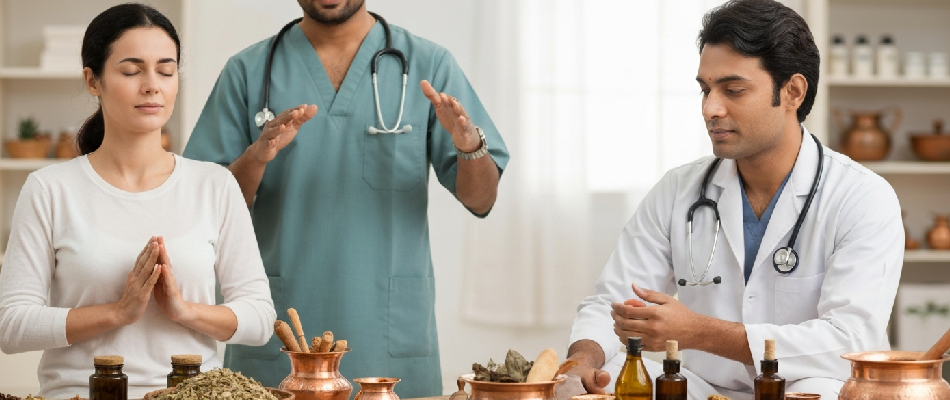
Anxiety Disorders: An Integrative Ayurvedic Approach
Introduction
Anxiety disorders are among the world’s most common mental health conditions,characterized by persistent fear, excessive worry, and physical tension that interfere with daily life. While occasional anxiety is normal, clinical anxiety becomes chronic, disproportionate, and difficult to control—often affecting work, relationships, and emotional well‑being.Ayurveda understands anxiety as Chittodvega, a manifestation of disturbed Vata, influenced by imbalances in Rajas and Tamas, creating restlessness, fear, palpitations, and mental instability.
Global Prevalence
- • 359 million people worldwide were living with an anxiety disorder in 2021, making it the most common mental disorder globally.
- • Anxiety affects 4.4% of the global population, with women disproportionately impacted.
- • Anxiety disorders have risen significantly, particularly during and after global crises such as the COVID‑19 pandemic.
- • Despite being highly treatable, only 1 in 4 people receive treatment.
Symptoms & Signs
Common symptoms of anxiety disorders include:
Emotional & Cognitive Symptoms
- • Excessive worry, fear, or sense of impending doom
- • Irritability, difficulty concentrating
Physical Symptoms
- • Palpitations, sweating, trembling
- • Rapid breathing, chest tightness
- • Nausea, abdominal distress, sleep disturbance
Behavioral Symptoms
- • Avoidance of triggering situations
- • Restlessness, agitation
Diagnosis
Diagnosis includes:
- • Clinical evaluation using DSM‑5‑TR criteria
- • Comprehensive medical history & physical examination
- • Anxiety rating scales (e.g., Zung, HAM‑A)
Conditions may begin in childhood or adolescence and often co‑occur with depression or substance‑use disorders. [who.int]
Ayurveda’s Understanding of Anxiety (Chittodvega)
Ayurveda identifies anxiety as Chittodvega, arising due to:
- • Clinical evaluation using DSM‑5‑TR criteria
- • Comprehensive medical history & physical examination
- • Anxiety rating scales (e.g., Zung, HAM‑A)
Ayurvedic & Panchakarma Treatment at Dr. Kalra’s Center
- Ayurveda identifies anxiety as Chittodvega, arising due to:
- • Vitiation of Vata dosha
- • Imbalance of Rajas and Tamas (mental Gunas)
- • Disturbance of Manovaha Srotas (mind‑channels)
Ayurvedic & Panchakarma Treatment at Dr. Kalra’s Center
Our integrative programs combine Ayurvedic medicine, Panchakarma, lifestyle therapy, and mind‑body practices for long‑lasting relief.
Panchakarma Therapies
- • Shirodhara
Calms the brain, regulates cortisol, reduces restlessness, improves sleep. - • Nasya (Pratimarsha Nasya)
Balances Vata, supports brain function, reduces anxiety and rumination. - • Abhyanga (Full‑Body Oil Massage)
Promotes parasympathetic activation and stabilizes the nervous system. - • Basti Therapy
Vata‑balancing medicated enemas shown to improve mood, anxiety, and gut‑brain axis regulation. - • Snehapana, Virechana & Swedana
Used selectively to detoxify, restore balance, and strengthen mental resilience.
Clinical Evidence (Case Studies)
- • Panchakarma therapies improve sleep, mood, emotional stability, and cognitive clarity.
- • Balances Vata, supports brain function, reduces anxiety and rumination
- • Evidence‑informed Panchakarma protocols tailored to each individual
- • Calming, supportive therapeutic environment
- • Focus on long‑term healing, emotional balance & mental clarity
- • Integrative lifestyle, diet, and meditation guidance
We help you reclaim a life of calm, confidence, and resilience.